Submitted by Maria.Kapsalaki on Thu, 03/02/2023 - 11:49
The Airborne Infection Reduction through Building Operation and Design for SARS-CoV-2 (AIRBODS ) project aim is to deliver guidance on the ventilation operation and future design of non-domestic buildings and to quantify the risk of, and reduce the transmission of SARS-CoV-2 in buildings. It is doing this through experimentation, computer simulation and fieldwork supporting the guidance and tools.
Submitted by Maria.Kapsalaki on Thu, 03/02/2023 - 11:47
There is large amount of research on COVID-19 infections including the spread and removal mechanisms of the virus in indoor spaces. Ventilation, air cleaning and air disinfection are the main engineering measures to control the virus spread in buildings. Wells Riley model allows to calculate the infection risk probability for any airborne virus aerosol-based transmission, but this calculation is overcomplicated in the ventilation design because of large amount of input data needed that is not easy to understand to ventilation designers.
Submitted by Maria.Kapsalaki on Thu, 03/02/2023 - 11:39
Air cleaning has been considered an alternative method of improving indoor air quality and, in some cases, as a supplement to ventilation. The need for energy reduction to reduce the emission of CO2 into the atmosphere and subsequently combat the consequences of climate change has brought air cleaning into focus in recent years.
Submitted by Maria.Kapsalaki on Thu, 03/02/2023 - 11:36
By 2050, the entire built environment must be climate neutral. Before that final date, we have to find an alternative to the use of fossil energy in the built environment. The switch to a climate neutral built environment requires an integrated approach, focusing on switching to alternative, non-fossil fuels and on reducing the energy demand by taking energy efficiency measures.
Submitted by Maria.Kapsalaki on Thu, 03/02/2023 - 11:31
The 42nd AIVC Conference "Ventilation Challenges in a Changing World", was held in Rotterdam, Netherlands on 5-6 October 2022. Contains 99 papers and/or summaries.
The February & April 2023 editions of the REHVA Journal have been released, including a selection of articles presented at the 42nd AIVC conference - 10th TightVent - 8th venticool conference: "Ventilation Challenges in a Changing World" held in Rotterdam, the Netherlands on October 5-6, 2022.
Benjamin Jones, Dr.Eng., spoke with ASHRAE’s Technical Editor Rebecca Matyasovski about a proposed addendum to Standard 62.2 that considers harm as a basis of regulating contaminants in homes. He also talked about how this type of addenda could be used in other indoor spaces and by other organizations—and why you should always turn on your range hood.
In January 2023, the Environmental Law Institute (ELI) with funding from the U.S. Environmental Protection Agency (EPA), released the report: "Ventilation in Schools: A Review of State Policy Strategies".
In order to further develop the aims of AIVC, the AIVC Board has established an Industry Advisory Committee (IAC). The following observations are in this context important:
In the framework of The Trento EEMI Bauhaus Week, the European Mortgage Federation - European Covered Bond Council (EMF-ECBC) released a video-”call to action” (for distribution to 2000 banks and 5000 major companies) about the decarbonisation of buildings and the heat mitigation in cities.





 Login
Login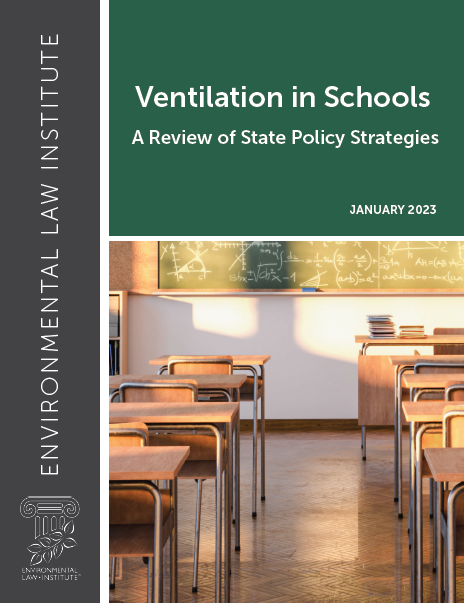 In January 2023, the Environmental Law Institute (